
Your cart is currently empty!
Why Logistics Companies Need Real-Time Field Tracking to Stay Competitive
Introduction
Logistics is a business of precision. Timelines, routes, fuel efficiency, and customer expectations leave little room for error. Yet, many logistics companies still operate with limited real-time visibility into their field teams—drivers, delivery executives, and on-ground coordinators. When delays occur, managers often find out too late to correct them.
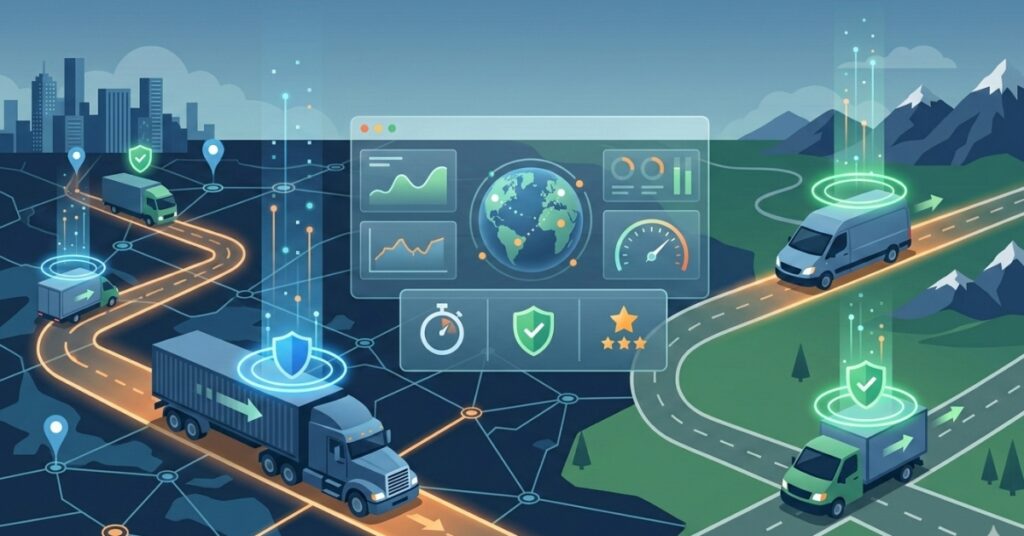
This is why real-time field tracking has become a strategic necessity rather than a technological upgrade. For logistics companies, tracking is not about control—it’s about visibility, predictability, and responsiveness. This blog explains how logistics field tracking improves execution across last-mile delivery, fleet coordination, and performance reporting.
The Visibility Gap in Traditional Logistics Operations
Without real-time tracking, logistics teams struggle with:
Uncertain delivery timelines
Inaccurate status updates
Inefficient route planning
Poor accountability during delays
Relying on phone calls and manual updates creates blind spots that directly impact customer satisfaction.
Why Real-Time Field Tracking Matters in Logistics
1) Immediate Operations Visibility
Logistics operations visibility enables managers to see:
Where deliveries are happening right now
Which routes are delayed
How long teams are stationary or moving
This real-time insight allows faster decisions and corrective action.
2) Optimizing Last-Mile Delivery Tracking
The last mile is the most expensive and unpredictable part of logistics. Last-mile delivery tracking helps:
Reduce failed delivery attempts
Improve route efficiency
Provide accurate customer updates
Even small improvements here significantly reduce costs.
3) Better Fleet and Field Coordination
When movement data is visible, companies can:
Coordinate drivers and field staff better
Avoid overlapping routes
Balance workloads across teams
This improves fleet and field coordination without additional manpower.
Delivery Workforce Tracking Improves Accountability
Delivery workforce tracking brings objective accountability by:
Recording start/end times
Tracking movement patterns
Identifying inefficiencies
This protects both the company and the field staff by replacing assumptions with facts.
Logistics Productivity Improvement Through Data
With tracking data, companies can analyze:
Average delivery time
Idle time patterns
Route efficiency
High-delay zones
These insights drive continuous logistics productivity improvement.
Performance Reporting Without Manual Burden
Manual reporting in logistics is often delayed or incomplete. Automated delivery performance reporting provides:
Accurate daily summaries
Route-wise analysis
Team-wise productivity insights
Managers can focus on optimization rather than chasing updates.
Why Lightweight Tracking Works Best for Logistics
Logistics teams need tools that are:
Fast and reliable
Easy to use in motion
Low on battery and data usage
Heavy systems slow execution. Focused field tracking software for logistics ensures higher adoption and better data quality.
ShoTrack’s Fit for Logistics Teams
ShoTrack supports logistics operations by:
Tracking real-time movement
Recording delivery routes
Generating simple, actionable reports
It integrates easily into existing logistics workflows without disruption.
Conclusion
In logistics, delays cost money and reputation. Real-time field tracking empowers companies to act faster, plan better, and deliver more reliably.
With focused tools like ShoTrack, logistics companies gain the visibility they need to stay competitive—without adding operational complexity.