
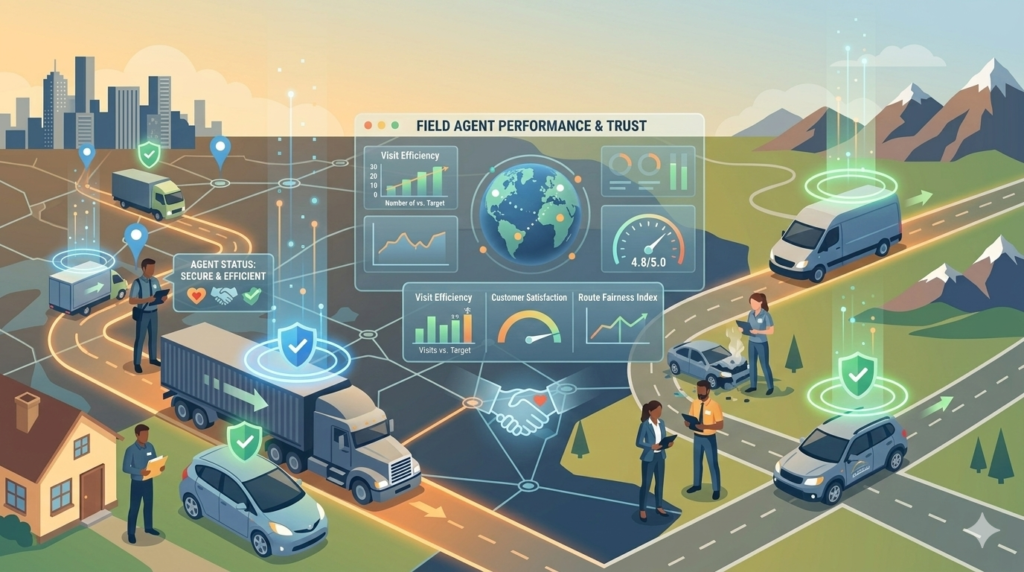
How Insurance Companies Track Field Agents Without Hurting Trust
Introduction
Insurance businesses rely heavily on field agents to build relationships, sell policies, and service customers. Trust is the foundation of this model. However, as agent networks grow, insurance companies face a challenge: how to ensure productivity and consistency without damaging trust.
This is where modern insurance agent tracking comes into play. When implemented correctly, tracking strengthens trust rather than undermining it. This blog explores how insurance companies can improve field agent productivity while maintaining transparency and respect.
Why Insurance Field Management Is Unique
Insurance agents differ from other field roles because:
Their work is relationship-driven
Productivity is not always transactional
Autonomy is highly valued
Heavy surveillance models fail in such environments. Effective insurance field force management requires balance.
The Wrong Way to Track Agents
Tracking fails when it:
Feels intrusive
Monitors personal behavior
Lacks transparency
Is used punitively
Such approaches erode morale and increase attrition.
The Right Approach: Trust-Based Employee Tracking
Trust-based employee tracking focuses on:
Work presence, not personal life
Movement patterns, not conversations
Aggregate insights, not micromanagement
This ensures fairness and objectivity.
How Agent Activity Tracking Improves Performance
Agent activity tracking helps organizations:
Understand market coverage
Identify inactive territories
Balance workloads
Support underperforming agents
When used constructively, tracking enables coaching—not policing.
Field Agent Reporting Without Manual Pressure
Manual reports consume time and reduce selling effort. Automated field agent reporting:
Captures activity passively
Reduces paperwork
Improves data accuracy
Agents spend more time with customers, not forms.
Improving Insurance Sales Productivity Fairly
With objective data, managers can:
Set realistic targets
Conduct fair reviews
Recognize genuine effort
This improves insurance sales productivity while preserving agent dignity.
Ethical Tracking Practices Build Acceptance
Transparency is key. Ethical tracking includes:
Clear communication on what is tracked
Defined work-hour boundaries
Purpose-driven data usage
Such ethical tracking practices increase acceptance and trust.
ShoTrack’s Role in Insurance Agent Tracking
ShoTrack is designed to:
Track movement during work hours
Provide clean, simple reports
Avoid intrusive monitoring
It supports field workforce transparency without harming relationships.
Trust Grows When Data Is Fair
When agents know:
Data is objective
Evaluation is consistent
High performers are protected
Trust strengthens rather than weakens.
Conclusion
Tracking and trust are not opposites—they are partners when implemented correctly. For insurance companies, the goal is not to watch agents, but to support them with clarity and fairness.
With focused tools like ShoTrack, insurers can improve productivity while preserving the trust that drives long-term success.